
A CLOSER LOOK
German cockroaches
Blattella germanica
Small, fast, and often found near kitchen appliances. Identifying this cockroach early helps you choose the right response.
Learn what to look for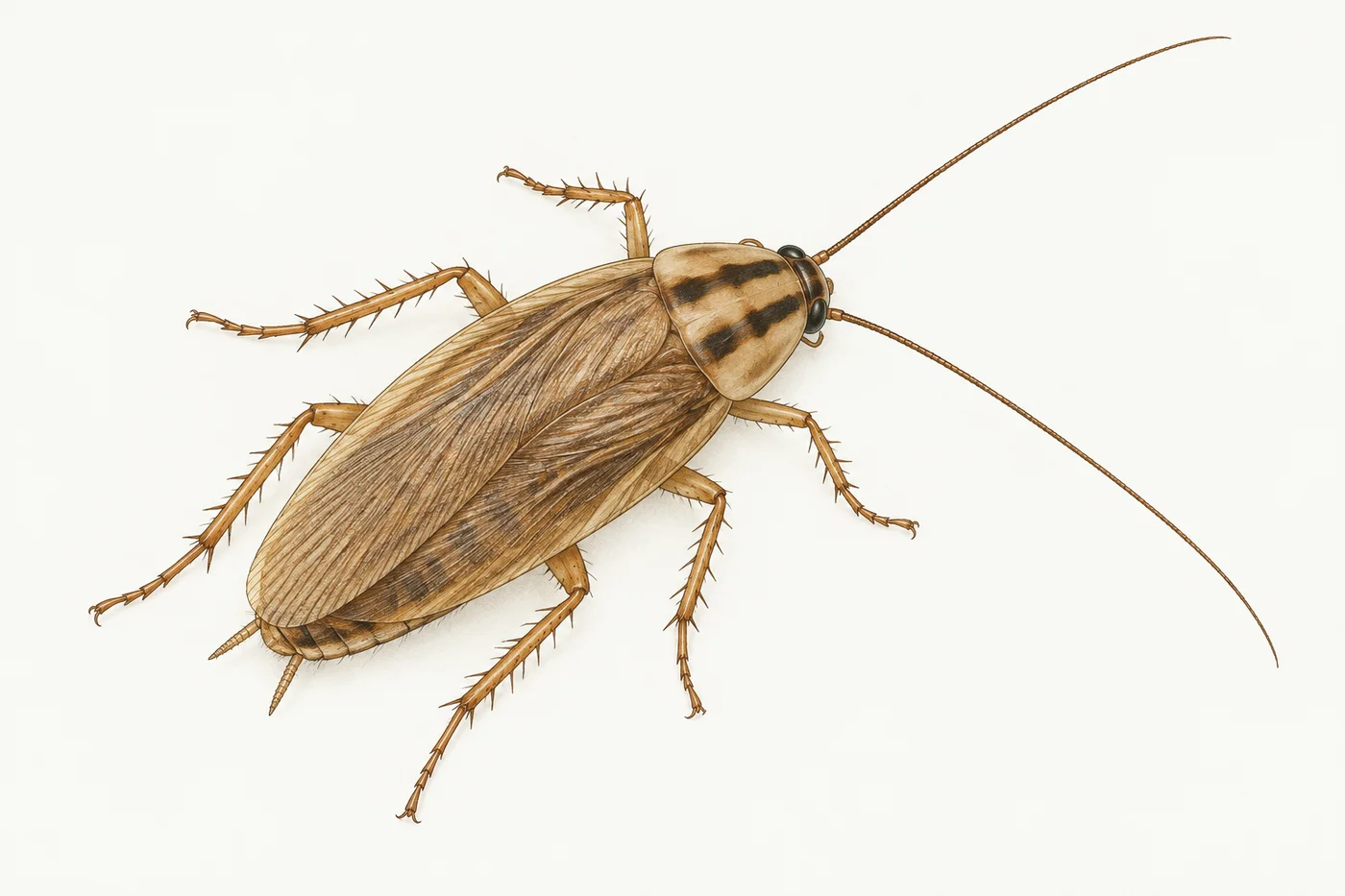
- Adult size
- About ½–⅔ inch
- Look for
- Two dark stripes
- Common spots
- Kitchens & bathrooms
01 / IDENTIFICATION
The two stripes are your best starting point.
Tan body, dark stripes
Adults are light brown to tan, with two lengthwise dark bands on the shield just behind the head.
Long antennae
The antennae are slender and prominent. Use the markings behind the head to narrow down the identification.
Warm, sheltered hiding places
Check around plumbing, cabinet joints, and appliances. German cockroaches favor warm places with nearby moisture.
02 / A CLOSER LOOK
The small ones look different.
A young German cockroach is not simply a miniature tan adult. Knowing the difference makes a mixed group much easier to recognize.
Darker. Smaller. No wings.
Nymphs are dark with a lighter streak along the middle of the back. They develop through several molts before adulthood.
Tan, with two dark bands.
Adults have developed wings. A female may carry a brown egg case at the end of her body until the eggs are close to hatching.
Tell us if you are seeing different sizes.
A photo of a small, wingless cockroach can be just as helpful as a photo of an adult. Include where you found it and whether sightings are recurring.
03 / COMPARE
Could it be something else?
Look for pale bands across the body rather than the German cockroach’s two dark lengthwise stripes.
Adults are much larger and reddish brown, with a pale border on the shield behind the head.
04 / NEXT STEPS
What to do if you find them.
Keep a record
Photograph one if you can. Note which rooms are affected and where you see activity repeatedly.
Reduce food and water
Store food securely, clean spills and crumbs, and address leaks. Reduce clutter around likely hiding places.
Choose targeted treatment
Inspection, monitoring, and carefully placed baits are more useful than setting off a fogger. Ask about treatment specifically for German cockroaches.
ENVEXA · GREATER CINCINNATI
Found something at home?
Send a clear photo and tell us where you found it. We’ll help you work out the next step.
Behind this guide
Based on university extension and public-health guidance. Identification from a photograph has limits.
- University of Minnesota Extension ↗Adults, nymphs and indoor habitat
- University of Maryland Extension ↗Distinguishing common species
- University of Kentucky Entomology ↗Monitoring and treatment