
A CLOSER LOOK
House mice
Mus musculus
You may notice the evidence before you see the mouse. Start with the activity inside, then look for the openings that let it in.
Learn what to look for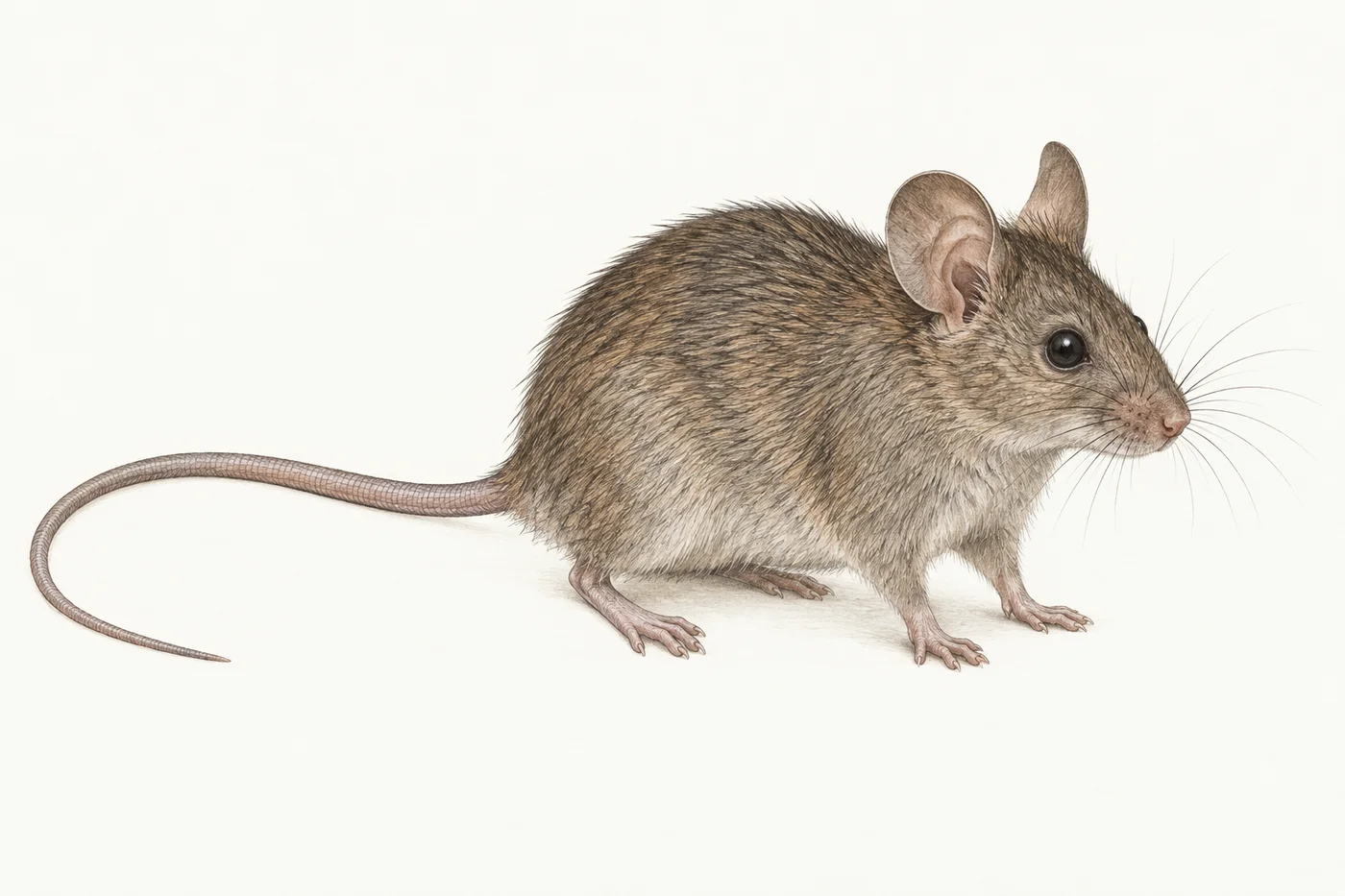
- Total length
- About 5–7 inches
- Look for
- A nearly bare tail
- Entry gap
- As small as ¼ inch
01 / IDENTIFICATION
Small body. Large ears. A long tail.
Gray-brown fur
House mice generally have brownish or gray fur, with a lighter belly rather than a sharply contrasting white underside.
A nearly hairless tail
The thin, scaly-looking tail helps distinguish house mice from some native mice with furrier, two-tone tails.
Evidence along edges
Look for gnawed food packages, droppings, and shredded nesting material. Mice often travel beside walls and sheltered edges.
02 / A CLOSER LOOK
A surprisingly small way in.
A mouse can squeeze through an opening about a quarter of an inch across. Gaps around utility lines, door bottoms, and the foundation deserve attention.
Start at the edges of the house.
Check where pipes and cables enter, and where doors meet the threshold. An entry inspection should go beyond the room where you saw the mouse.
03 / COMPARE
Could it be something else?
Typically have a white underside and a furred tail that is darker above and lighter below.
A clear photo is more helpful than guessing from droppings alone. Avoid handling a live mouse.
04 / NEXT STEPS
What to do if you find them.
Map the activity
Note affected rooms and photograph damaged packaging or entry gaps. Keep children and pets away from contaminated areas.
Remove easy food access
Use secure food containers and avoid leaving pet food out overnight. Cleaning helps, but will not by itself remove an established infestation.
Address mice and openings together
Ask for an inspection that considers current activity, safe control placement, and entry repairs. Follow-up checks help show whether activity has stopped.
ENVEXA · GREATER CINCINNATI
Found something at home?
Send a clear photo and tell us where you found it. We’ll help you work out the next step.
Behind this guide
Based on university extension and public-health guidance. Identification from a photograph has limits.
- University of California IPM ↗Identification and entry prevention
- University of Kentucky Entomology ↗Activity, sanitation and control
- Centers for Disease Control and Prevention ↗Cleaning rodent contamination