
Why Identification Matters Before You Do Anything
Yellow jackets and paper wasps are the two most common stinging insects that Cincinnati homeowners encounter from May through October. While they look somewhat similar at a glance, their behavior, nesting habits, aggression levels, and the appropriate treatment approach differ significantly. Misidentifying the species can lead to ineffective treatment or, worse, a dangerous encounter with an aggressive colony.
Paper Wasps
Identification
Paper wasps are slender with long legs that dangle below the body during flight. They are typically brownish-red to dark brown with yellow markings, though coloration varies by species. Their body shape is noticeably thinner and more elongated than yellow jackets. When at rest, their wings fold lengthwise along the body.
Nesting
Paper wasps build open, umbrella-shaped nests made of a papery material (chewed wood fiber mixed with saliva). Nests hang from a single stalk and are typically found under eaves, porch ceilings, deck railings, playground equipment, mailbox interiors, and outdoor light fixtures. Nests are visible and exposed, with the hexagonal cells clearly visible from below.
Colony sizes are relatively small: 20 to 75 workers in a typical nest.
Behavior
Paper wasps are generally non-aggressive unless the nest is directly disturbed. They are beneficial insects that prey on caterpillars, flies, and other garden pests. A paper wasp nest in a low-traffic area can often be left alone. However, nests near doorways, patios, children's play areas, and high-traffic paths should be removed because of the sting risk from accidental disturbance.
Yellow Jackets
Identification
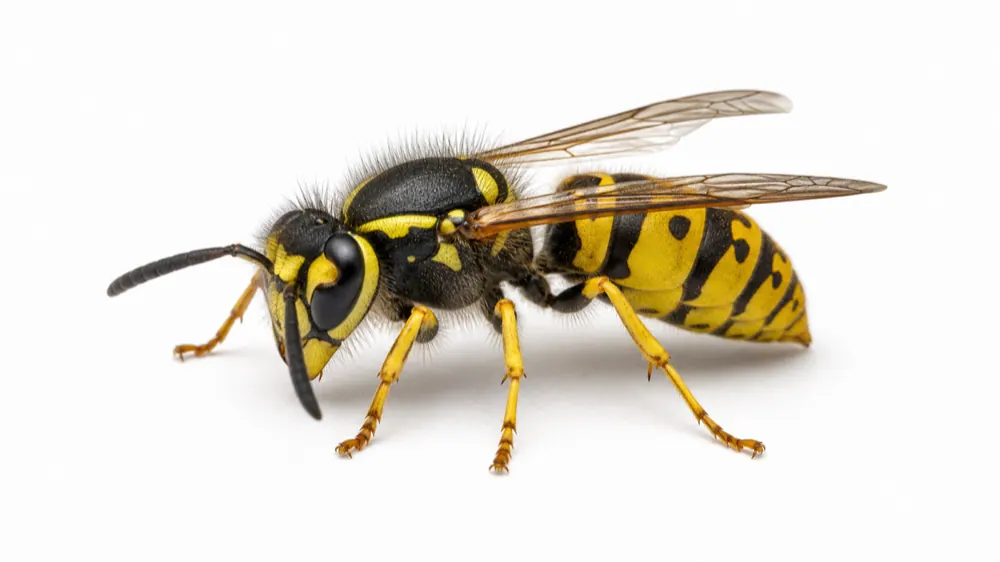
Yellow jackets are stocky, bright yellow and black with clearly defined banding. They are shorter and more compact than paper wasps, with a distinctive rapid, side-to-side flight pattern. Their legs are tucked close to the body during flight (unlike the dangling legs of paper wasps). Workers are approximately 1/2 inch long.
Nesting
Here is the critical difference: most yellow jacket species in Cincinnati nest underground. They build large colonies in abandoned rodent burrows, landscape bed voids, wall cavities, and under concrete slabs. You will typically see a steady stream of workers entering and exiting a small hole in the ground or a gap in a structure.
Some species (particularly the bald-faced hornet, which is technically a yellow jacket) build large, enclosed, football-shaped paper nests in trees, on building exteriors, and under overhangs. These nests can be enormous by late summer, containing 1,000 to 5,000 workers.
Behavior
Yellow jackets are significantly more aggressive than paper wasps, especially from August through October when colonies reach peak size and workers become increasingly defensive of the nest. They are attracted to human food and beverages, particularly sugary drinks and grilled meat, making outdoor dining areas and barbecues prime encounter zones.
Yellow jackets can sting repeatedly (they do not lose their stinger like honey bees), and they release an alarm pheromone when crushed or threatened that recruits additional workers to attack. Disturbing a ground nest while mowing, gardening, or walking over it can trigger a mass defensive response involving dozens to hundreds of stings.
When and How to Address Each
Paper Wasp Nests
Small nests (fewer than 20 cells) in low-traffic areas can be left alone. For nests near high-traffic areas, treatment is straightforward: apply a wasp-specific aerosol spray (Raid Wasp Killer, Spectracide) directly into the nest at dusk when workers are less active. Wait 24 hours and verify no activity before removing the nest.
Yellow Jacket Nests
Do not attempt to treat a yellow jacket ground nest yourself unless you have experience, proper equipment, and can verify the colony is small. Large colonies with heavy traffic at the entrance are best handled by a professional. The risk of multiple stings from a disturbed underground colony is significant, and individuals with bee sting allergies face a potentially life-threatening situation.
Professional yellow jacket treatment typically involves applying insecticidal dust (Delta Dust, Tempo Dust) directly into the nest entrance. The dust coats workers as they pass through, and they carry it deep into the nest where it contacts the queen and brood. The colony typically dies within 24 to 48 hours.
Frequently Asked Questions
When are yellow jackets most aggressive in Cincinnati?
Late August through October. Colonies reach maximum size in late summer, food resources become scarce, and workers become increasingly aggressive in their foraging behavior. This coincides with outdoor fall activities, football tailgating, and yard cleanup, creating more frequent human encounters.
How much does nest removal cost?
Paper wasp nests: $75 to $175 depending on location and accessibility. Yellow jacket ground nests: $150 to $300. Large aerial nests in trees or on structures: $200 to $400. Envexa charges $149 for most single-nest treatments with a 30-day guarantee.
Should I seal a yellow jacket entrance hole?
Never seal a ground nest entrance without treating first. Workers trapped inside will find or create alternate exits, potentially into your home through wall cavities, plumbing chases, or other interior access points. Always treat first, then seal after confirming the colony is dead.