
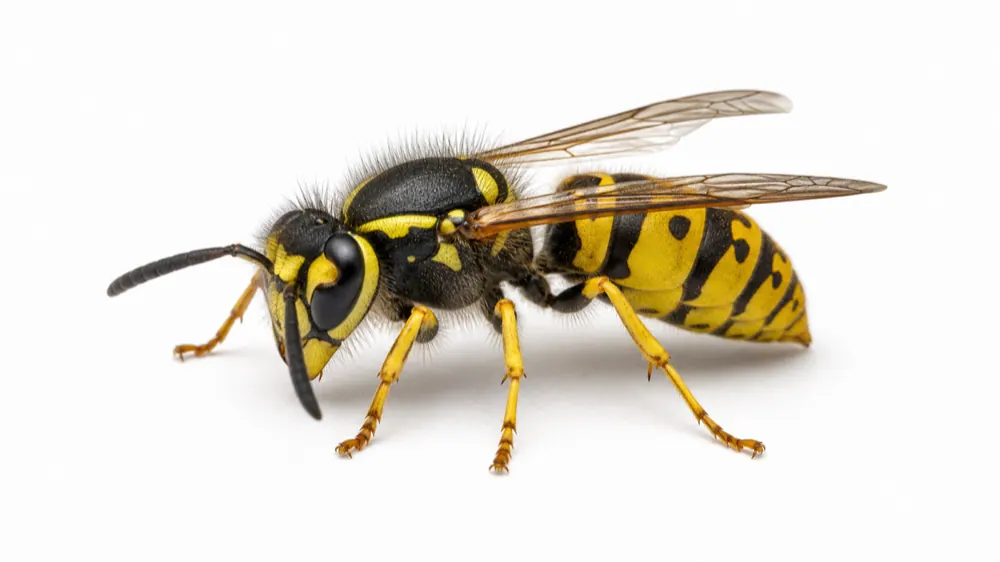
The Nest May Be Invisible Until It Is Disturbed
Yellow jackets often nest in old rodent burrows, landscape voids, stump holes, railroad tie gaps, and spaces under concrete or roots. From a distance, the entrance may look like a small hole in the ground. The real clue is traffic: insects flying in and out of the same spot all day.
Cincinnati homeowners usually discover these nests while mowing, trimming, gardening, or letting a dog into the yard. The vibration and movement near the entrance can trigger defensive behavior quickly.
Why Late Summer Feels Worse
Yellow jacket colonies grow through the warm season. By late summer and early fall, there may be many more workers defending the nest. That is why a spot that seemed quiet in June can become a serious problem by August or September.
What Not to Do
Do not pour gasoline, water, or random chemicals into the hole. Do not seal the entrance while the colony is active. Do not mow over the entrance repeatedly to test it. These approaches can be unsafe and may drive insects to another opening or increase defensive activity.
How to Confirm the Entrance
Watch from a safe distance during the day. Look for steady flight to one hole or crack. Mark the area from far enough away that nobody walks over it, then keep people and pets clear until it is handled.
How Envexa Handles Ground Nests
We identify the nest entrance, assess the risk around the yard, and treat the active colony using the right method for the location. After activity stops, the area can be repaired if needed. The order matters: treatment first, sealing or filling later.
Frequently Asked Questions
Can yellow jackets sting more than once?
Yes. Yellow jackets can sting repeatedly and can become defensive near the nest.
Should I mow near the nest before service?
No. Leave the area alone and keep pets and children away from the entrance.
Are ground nests always yellow jackets?
Not always, but yellow jackets are common ground nesters in Cincinnati and should be treated carefully.