
Spring Triggers Massive Ant Activity Across Greater Cincinnati
Every March, as soil temperatures in the Ohio River Valley climb above 50 degrees Fahrenheit, ant colonies that have been dormant all winter begin sending workers out to forage. These scouts follow the path of least resistance straight into your home through foundation cracks, gaps around windows, and unsealed utility penetrations.
Cincinnati sits at the intersection of several factors that make spring ant pressure especially intense. The Ohio River Valley creates a warm, humid microclimate that accelerates colony development. The region's clay-heavy soil retains moisture near foundations. And Greater Cincinnati's housing stock includes thousands of pre-1980 homes with settling cracks, deteriorating weatherstripping, and gaps around original plumbing that ants exploit without difficulty.
Neighborhoods like Hyde Park, Oakley, Clifton, Northside, and Mt. Lookout experience some of the heaviest spring ant pressure in the metro area. Their century-old homes, mature landscaping, and proximity to green spaces create ideal conditions for large ant populations within foraging distance of residential structures.
The Ant Species You Are Most Likely Dealing With
Odorous House Ants
The most common spring kitchen invader in Cincinnati. Small, dark brown, about 1/8 inch long. They trail along countertops, baseboards, and window sills in visible lines, often numbering in the hundreds. The telltale sign: crush one and it produces a rotten coconut smell. Colonies can contain 10,000 to 100,000 workers with multiple queens, which is why they seem impossible to eliminate with store-bought sprays.
Pavement Ants
You will recognize these by the small dirt mounds they push up through cracks in driveways, sidewalks, patios, and basement slab floors. Dark brown to black, slightly larger than odorous house ants. They are especially common in Anderson Township, West Chester, and Mason where newer construction with concrete slab foundations gives them easy access points.
Carpenter Ants
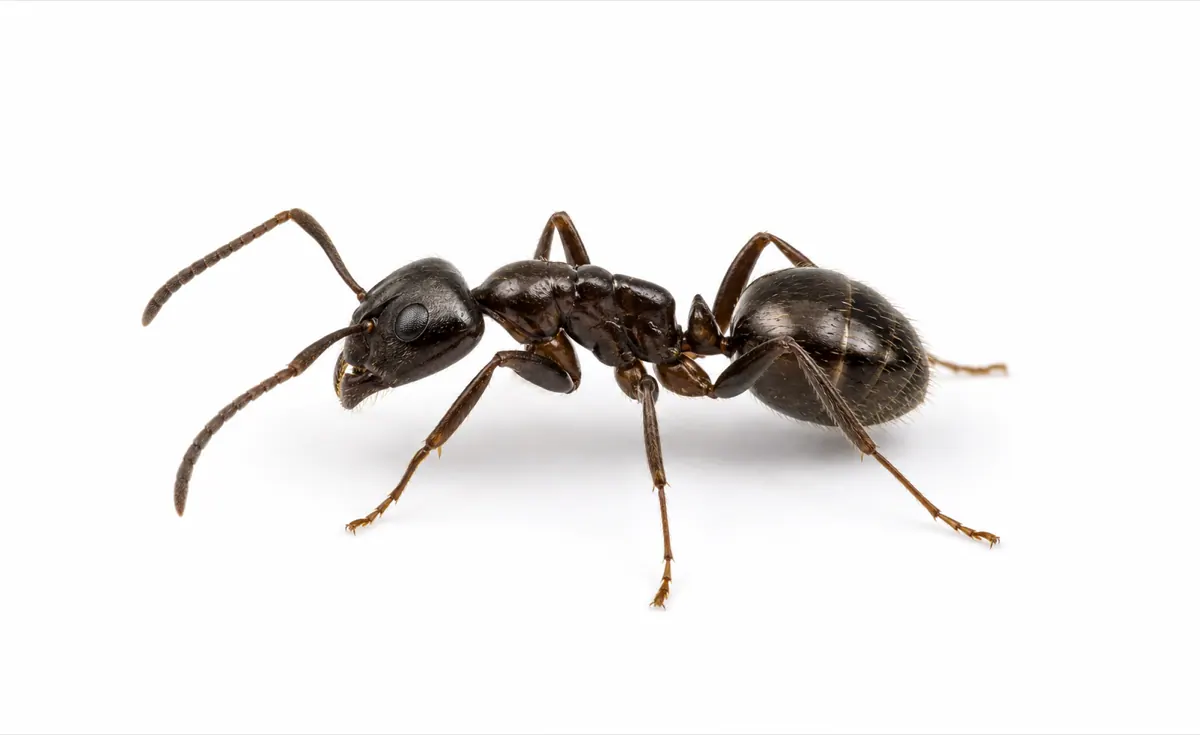
The largest ant species in Ohio. Black, sometimes with reddish coloring, ranging from 1/4 to 1/2 inch long. Carpenter ants do not eat wood. They excavate it to create nesting galleries, leaving behind piles of sawdust-like frass. They become active in spring and may send out winged ants that are easy to misread without a closer look. Cincinnati homes with moisture-damaged wood, particularly around bathrooms, rooflines, and deck attachments, are at highest risk.
Why the Hardware Store Spray Makes Everything Worse
The single most common mistake Cincinnati homeowners make is grabbing a can of Raid, Ortho Home Defense, or similar repellent spray from Kroger or Home Depot. These products kill the ants you spray directly on contact. The problem is what happens next.
The colony, which can number 100,000 or more workers, detects the repellent chemical barrier. Rather than walking through it, the colony responds with a survival mechanism called budding. The colony splits. Queens and workers separate into multiple satellite colonies that establish in new locations throughout your home. Where you had one colony near the kitchen, you now have three or four colonies in the kitchen, bathroom, and laundry room.
Professional non-repellent treatments work on a fundamentally different principle. Products like Alpine WSG and Demand CS are completely undetectable to ants. Workers walk through the treated zone normally, pick up the active ingredient on their bodies, and carry it back to the colony through normal grooming and food-sharing behavior called trophallaxis. Within 7 to 14 days, the transfer effect reaches the queen and the entire colony collapses.
This is why professional treatment eliminates the colony while DIY spray creates a bigger problem.
What You Can Do Right Now to Reduce Ant Pressure
Trim vegetation away from your foundation. Branches, shrubs, and ground cover touching your home act as bridges for ants to bypass any exterior treatment zone. Maintain a 12-inch gap between plantings and your foundation wall.
Reduce mulch depth to 2 inches or less. Deep mulch beds against the foundation create warm, moist harborage that ants use as staging areas before entering the structure. Pull mulch back 6 inches from the foundation if possible.
Fix moisture issues immediately. Leaking hose bibs, clogged gutters depositing water against the foundation, condensation on pipes, and poor grading that directs water toward the home all attract moisture-seeking ant species.
Seal obvious entry points. Caulk gaps around windows, doors, and where utility lines (cable, electrical, plumbing) enter the home. Pay special attention to where the sill plate meets the foundation wall.
Clean ant trails with soapy water. If you see a trail inside, wipe it down with dish soap solution. This destroys the pheromone trail that guides other workers. Do not spray repellent products on the trail.
When It Is Time to Call a Professional
If you are seeing ants inside your home repeatedly, especially in the same locations after cleaning, the colony is established nearby and foraging routes are well established. If you see large black ants (carpenter ants), winged swarmers indoors, or sawdust piles near wood, professional inspection is urgent.
Professional treatment for ants in the Cincinnati area typically involves a combination of exterior perimeter treatment with non-repellent product, targeted interior crack-and-crevice applications at entry points, and granular bait in landscaping beds. Most ant problems resolve within 7 to 21 days after professional treatment.
Frequently Asked Questions
How much does ant treatment cost in Cincinnati?
Single ant treatments in the Cincinnati market often range from $149 to $300 depending on species and severity. Quarterly prevention plans that keep ants from returning typically run $40 to $65 per month.
Are ants dangerous?
Most ant species in Cincinnati are nuisance pests. Carpenter ants cause structural damage by excavating wood for nesting. Fire ants, which are rare in Ohio, can deliver painful stings. All ant species can contaminate food.
Why do I have ants in winter?
If you see ants during winter months, they are nesting inside your home, likely in a wall void near a heat source. This requires professional treatment targeting the interior nest location.
What makes carpenter ants different from small kitchen ants?
Carpenter ants are larger, often black or dark brown, and more likely to show up near damp wood, decks, windows, bathrooms, or wooded edges. Small kitchen ants usually trail toward food or moisture sources.