
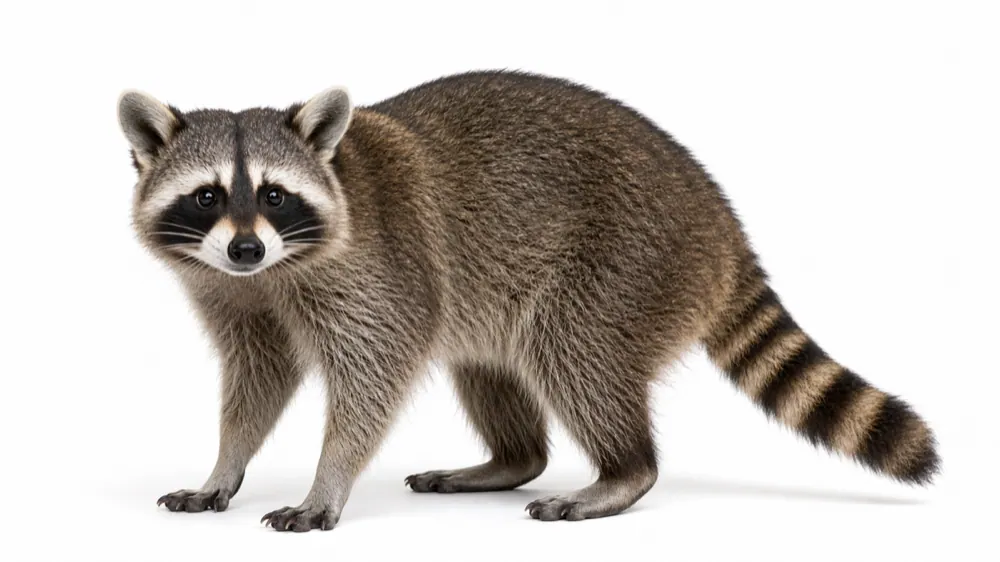
Raccoon Problems Usually Start at the Roofline
Raccoons are strong, curious, and very good at turning a weak roofline detail into an active entry point. In Cincinnati, the calls often come from homes near wooded streets, creek corridors, ravines, and older neighborhoods with mature trees. Hyde Park, Mount Lookout, Anderson Township, Indian Hill, Loveland, and parts of West Chester all have the kind of canopy and structure access that make raccoon activity more likely.
The first clue is usually noise. Raccoons are heavier than squirrels and mice, so the sound is often described as thumping, dragging, slow walking, or something moving insulation above a ceiling. Because raccoons are mostly active at night, sounds after dark or before sunrise matter more than random daytime scratching.
Signs That Point Toward Raccoons
Heavy Nighttime Movement
Fast daytime scratching usually points toward squirrels. Small ticking or light wall movement usually points toward mice. Raccoon movement feels heavier. Homeowners often hear slow steps, bumps near a chimney, or movement above one room where the attic space changes height.
Fresh Exterior Damage
Look for torn soffit panels, lifted shingles, bent vents, disturbed fascia, damaged chimney caps, or dark staining around a gap. A raccoon does not need a wide-open hole to start. It can pull at a loose edge until the opening becomes usable.
Droppings and Odor
Raccoon droppings should be handled carefully. If there is a latrine area in an attic, on a roof, or near a deck, the service conversation changes from removal only to removal, sanitation, and prevention. Do not sweep or vacuum wildlife droppings without proper guidance.
Why You Should Not Seal the Opening First
It is tempting to close the obvious gap as soon as you find it. That can make the problem worse. If an animal is inside, sealing the opening can trap it in the structure or push it to tear through another weak spot. During denning season, young animals may also be present, which changes the removal plan.
A good wildlife inspection confirms the active opening, the direction of travel, the timing of activity, and whether the animal is still using the space. After that, exclusion makes sense. In the wrong order, exclusion becomes guesswork.
What Envexa Looks For
Envexa starts outside: roof returns, soffits, gable vents, chimneys, fascia, deck voids, crawlspace edges, and any place where tree canopy gives easy access. Then we connect that evidence to what the homeowner is hearing inside.
The best outcome is not just removing the current raccoon. It is understanding why that opening worked, repairing or recommending the right exclusion work, and explaining cleanup concerns when droppings, insulation damage, or odor are present.
Frequently Asked Questions
Are raccoons dangerous in an attic?
They can create damage, contamination, and safety concerns. The issue should be handled carefully, especially if droppings, young animals, or a chimney entry are involved.
Can raccoons get through a small gap?
They usually enlarge weak openings rather than sliding through tiny cracks. Loose soffit, vents, fascia returns, and roofline edges are common starting points.
Who handles raccoon removal in Cincinnati?
Envexa provides wildlife inspection, removal planning, exclusion recommendations, and cleanup guidance for Greater Cincinnati homes.