
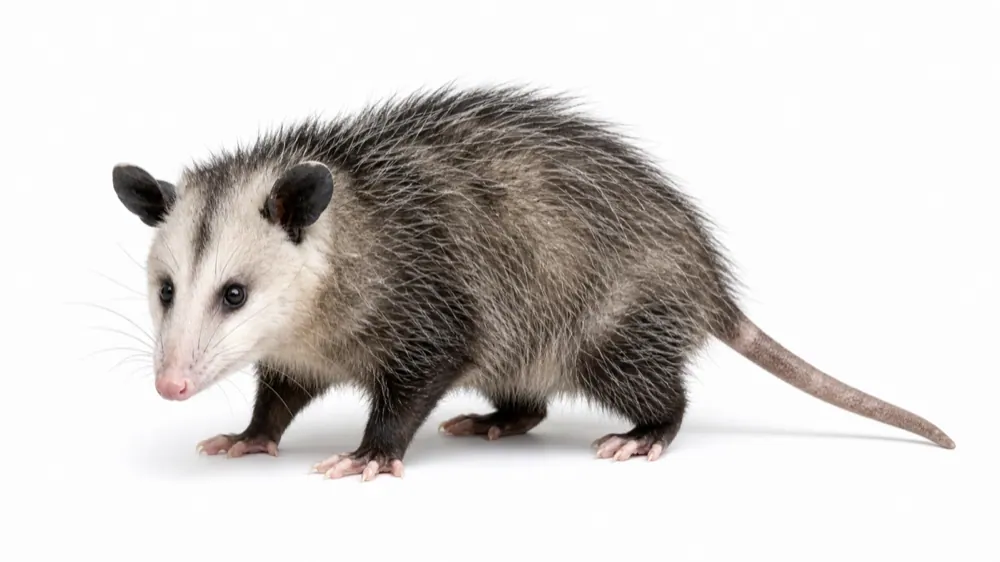
Most Opossum Calls Are Shelter or Food Calls
Opossums are opportunistic. Around Cincinnati homes, they often show up near crawlspace doors, decks, sheds, garages, brush piles, trash, bird seed, and pet food. One sighting in the yard may not mean much. Repeated activity near the same opening or food source deserves attention.
Clues That Matter
Repeated Nighttime Visits
Opossums are usually active at night. If you keep seeing one on a camera near the same deck, garage, or crawlspace edge, the route matters.
Low Shelter Areas
Decks, sheds, and crawl spaces give opossums a protected place to rest. A loose door, damaged vent, or open lattice can make the structure more attractive.
Food Pressure
Pet food, unsecured trash, compost, bird seed, fruit, and feeding stations can keep opossums returning even if they are not living under the home.
How to Reduce Attraction
Bring pet food inside, secure trash, clean spilled bird seed, close garage doors, repair crawlspace access, and remove brush piles near the home. If an animal is actively using a space, confirm activity before closing the opening.
How Envexa Approaches Opossum Issues
We look at the shelter site, food sources, droppings, tracks, access points, and whether the animal is denning or simply visiting. The recommendation should fit the pattern instead of treating every sighting like an emergency.
Frequently Asked Questions
Are opossums dangerous?
They should not be handled, but many calls are about nuisance shelter or food pressure. Droppings, close contact, or activity inside the structure should be addressed carefully.
Do opossums damage homes?
They are less destructive than raccoons or squirrels, but they can create odor, droppings, nesting material, and access issues in sheltered spaces.
Should I feed an opossum?
No. Feeding wildlife keeps animals close to the home and can attract other pests.