
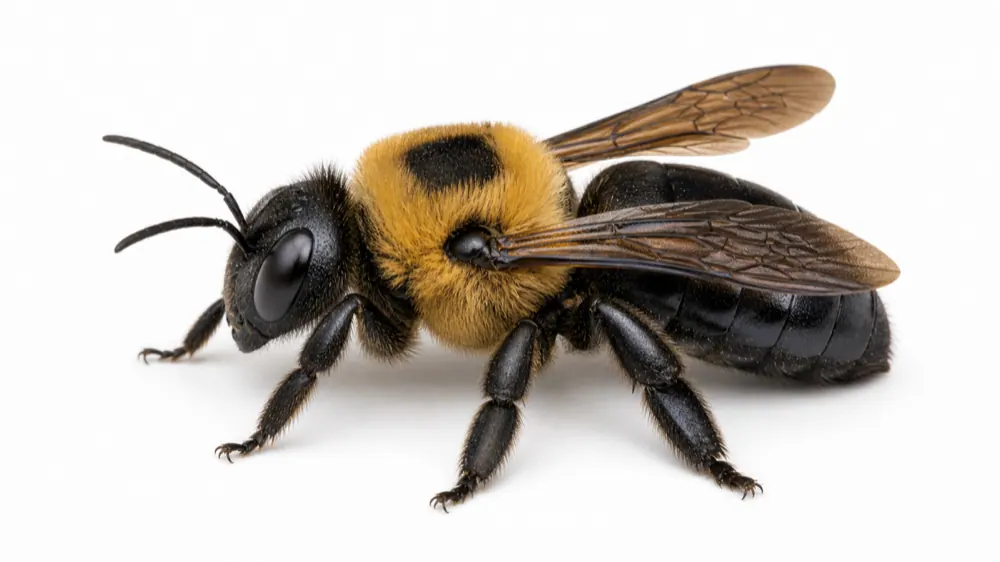
Carpenter Bees Are Looking for Wood They Can Use
Carpenter bees are common around Cincinnati decks, fascia boards, pergolas, porch ceilings, fence rails, and untreated trim. They drill into wood to create galleries where they can lay eggs.
The first sign is usually a large bee hovering near the same board over and over. Males can be intimidating, but they do not sting. Females can sting, but usually only when handled or trapped. The bigger issue is the wood damage that builds when the same areas are reused year after year.
What Carpenter Bee Damage Looks Like
Look for clean, round holes about the size of a finger, often with yellowish staining or sawdust below the opening. A single surface hole can turn into a longer gallery inside the board. Woodpeckers may also damage the area while trying to reach larvae inside.
Why Plugging Holes Too Early Can Fail
If you seal an active hole before the gallery is treated, bees may chew back out or open another route. The better sequence is to identify active holes, treat the gallery, allow time for activity to stop, and then repair or seal the opening with the right material.
Where Cincinnati Homes See Them Most
Carpenter bees favor weathered or unfinished wood. Deck rails, pergolas, porch trim, fascia, cedar details, and older painted boards with exposed edges are common targets. Homes near wooded lots or mature landscaping can see more activity in spring.
How to Reduce Future Activity
Keep exposed wood painted, sealed, or stained. Repair old holes after activity is controlled. Consider harder materials or capped trim in repeat problem areas. Professional service can help with active galleries and prevention recommendations.
Frequently Asked Questions
Are carpenter bees the same as bumble bees?
No. Carpenter bees often have a shiny black abdomen, while bumble bees are fuzzier. Carpenter bees also hover around wood surfaces and make round holes.
Do carpenter bees cause serious damage?
One hole may be minor, but repeated nesting in the same boards can create galleries, staining, and secondary woodpecker damage.
When is carpenter bee season in Cincinnati?
Activity usually becomes noticeable in spring as adults search for nesting sites around exposed wood.