
Cincinnati Has a Serious Bed Bug Problem
Cincinnati has consistently ranked among the top 15 worst cities in the United States for bed bug infestations according to annual reports from Orkin and Terminix. The city's dense apartment housing in neighborhoods like Clifton, Corryville, Avondale, Over-the-Rhine, and Downtown, combined with high tenant turnover and furniture recycling, creates conditions where bed bugs spread rapidly between units.
Finding bed bugs in your apartment is stressful. The steps you take in the first 24 to 48 hours after discovery significantly impact how quickly and completely the problem gets resolved.
Step 1: Confirm What You Have
Before doing anything else, verify that you are dealing with bed bugs and not carpet beetles, bat bugs, or other look-alikes. Bed bug adults are reddish-brown, flat, oval-shaped, and approximately the size of an apple seed (4 to 5 mm). After feeding, they swell and become more elongated and darker in color.
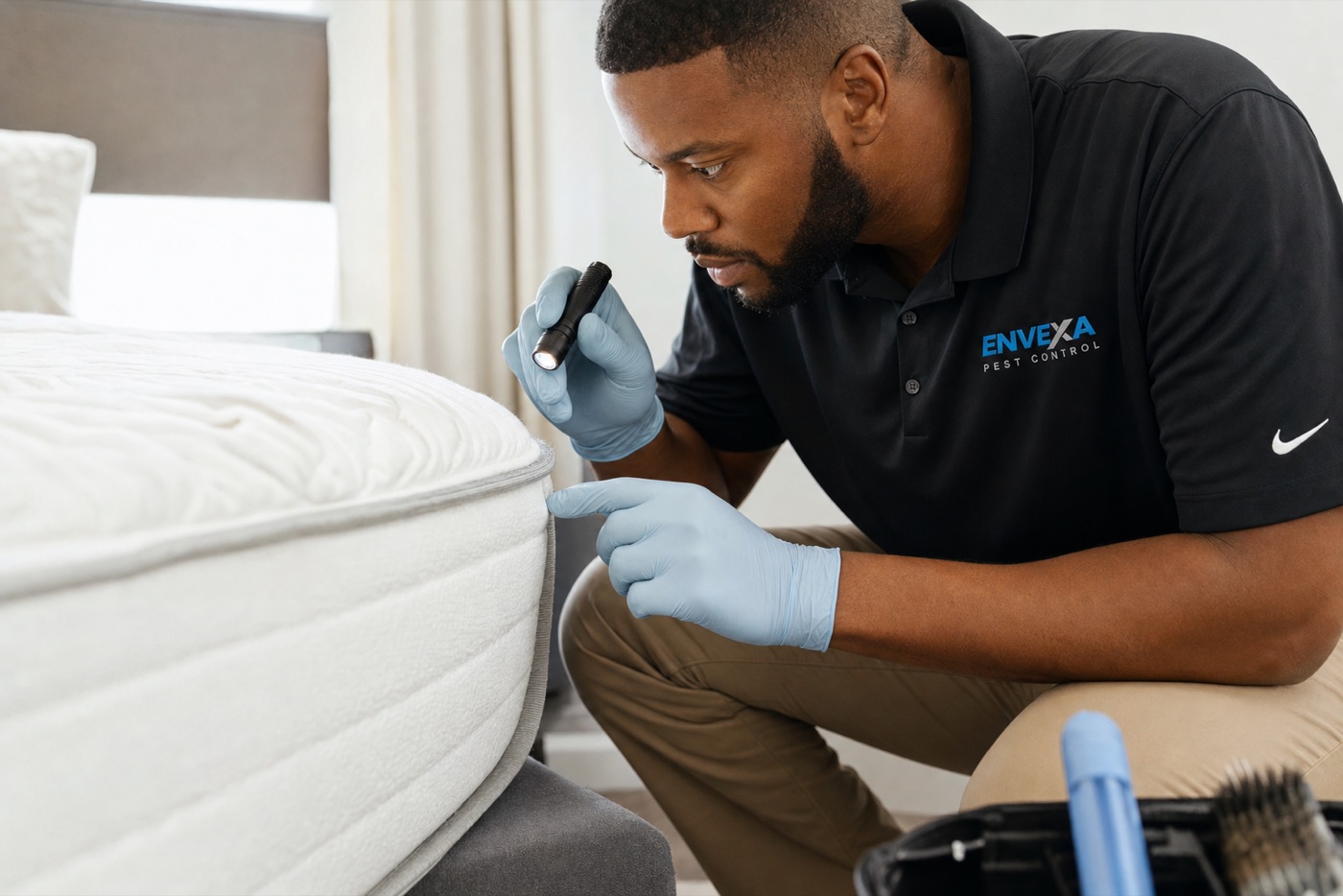
Definitive evidence includes: live bed bugs in mattress seams, box spring joints, or bed frame crevices; dark fecal spots (digested blood) on mattress fabric, especially along seams and at corners; shed skins (translucent husks) near harborage areas; and a sweet, musty odor in heavily infested rooms.
Step 2: Do Not Do These Things
Do not move your mattress or belongings out of the room. Moving infested items spreads bed bugs to unaffected rooms and makes treatment more complex and expensive.
Do not sleep in a different room or on the couch. Bed bugs will follow your CO2 trail. Sleeping in another room spreads the infestation. Sleep in your bed to keep them concentrated in one area for treatment.
Do not buy bug bombs or foggers. Total release foggers are the single worst response to bed bugs. The pyrethroid active ingredients repel bed bugs deeper into wall voids, behind baseboards, and into adjacent apartments through shared wall cavities. Multiple studies, including research from The Ohio State University, confirm that foggers spread infestations without eliminating them.
Do not throw away your mattress. A properly treated mattress is safe to continue using. Replacing the mattress without treating the room does nothing because bed bugs harbor in the bed frame, baseboards, and furniture, not just the mattress.
Step 3: Notify Your Landlord in Writing
Document the infestation with photos showing live bugs, fecal spots, or bite reactions. Send written notice to your landlord or property manager the same day you discover the problem. Email or text message with photos creates a timestamped record.
Ohio does not have a specific bed bug statute. However, landlords in Ohio are required under ORC 5321.04 to maintain habitable premises and comply with housing codes. Hamilton County and City of Cincinnati housing codes require landlords to address pest infestations. In practice, most Cincinnati property managers will arrange professional treatment because failing to do so creates liability and allows the infestation to spread to other units.
Step 4: Prepare for Professional Treatment
Your landlord should hire a licensed pest control company. Before the technician arrives, you will likely need to complete preparation including: laundering all bedding and clothing on high heat, reducing clutter in the bedroom, clearing items away from baseboards, and placing treated items in sealed bags or bins.
Professional bed bug treatment in Cincinnati typically involves a targeted liquid protocol: professional residual products applied to bed frames, baseboards, furniture joints, cracks, crevices, and travel paths, along with mattress and box spring encasements installed after treatment when appropriate.
A follow-up inspection at 14 days is mandatory to assess treatment effectiveness and retreat if necessary. Bed bug eggs hatch in 7 to 10 days, so single-visit treatment is rarely sufficient.
Step 5: Monitor After Treatment
Install bed bug interceptors under bed legs. These are small plastic traps that capture bed bugs attempting to climb onto the bed. Check them weekly for 60 days after treatment. Finding bed bugs in interceptors after treatment indicates retreatment is needed. Finding zero bugs for 60 consecutive days indicates successful elimination.
Frequently Asked Questions
Who pays for bed bug treatment in Cincinnati apartments?
In most cases, the landlord is responsible for treatment costs under Ohio habitability requirements. Some leases attempt to shift responsibility to tenants, but these clauses are often unenforceable when the tenant did not introduce the bed bugs. Document your move-in condition and report any issues immediately.
Can bed bugs spread between apartments?
Yes. Bed bugs travel through shared wall voids, along plumbing and electrical chases, and through gaps around baseboards and outlet covers. Treatment of a single unit in a multi-family building often needs to include adjacent units to prevent reinfestation.
How long does bed bug treatment take to work?
You should see significant reduction in activity within 7 days of professional treatment. Complete elimination typically requires 2 to 3 treatment visits over 4 to 6 weeks due to the egg hatching cycle. Envexa uses targeted liquid treatment with follow-up because bed bug eggs and hidden harborages require a careful service plan.